


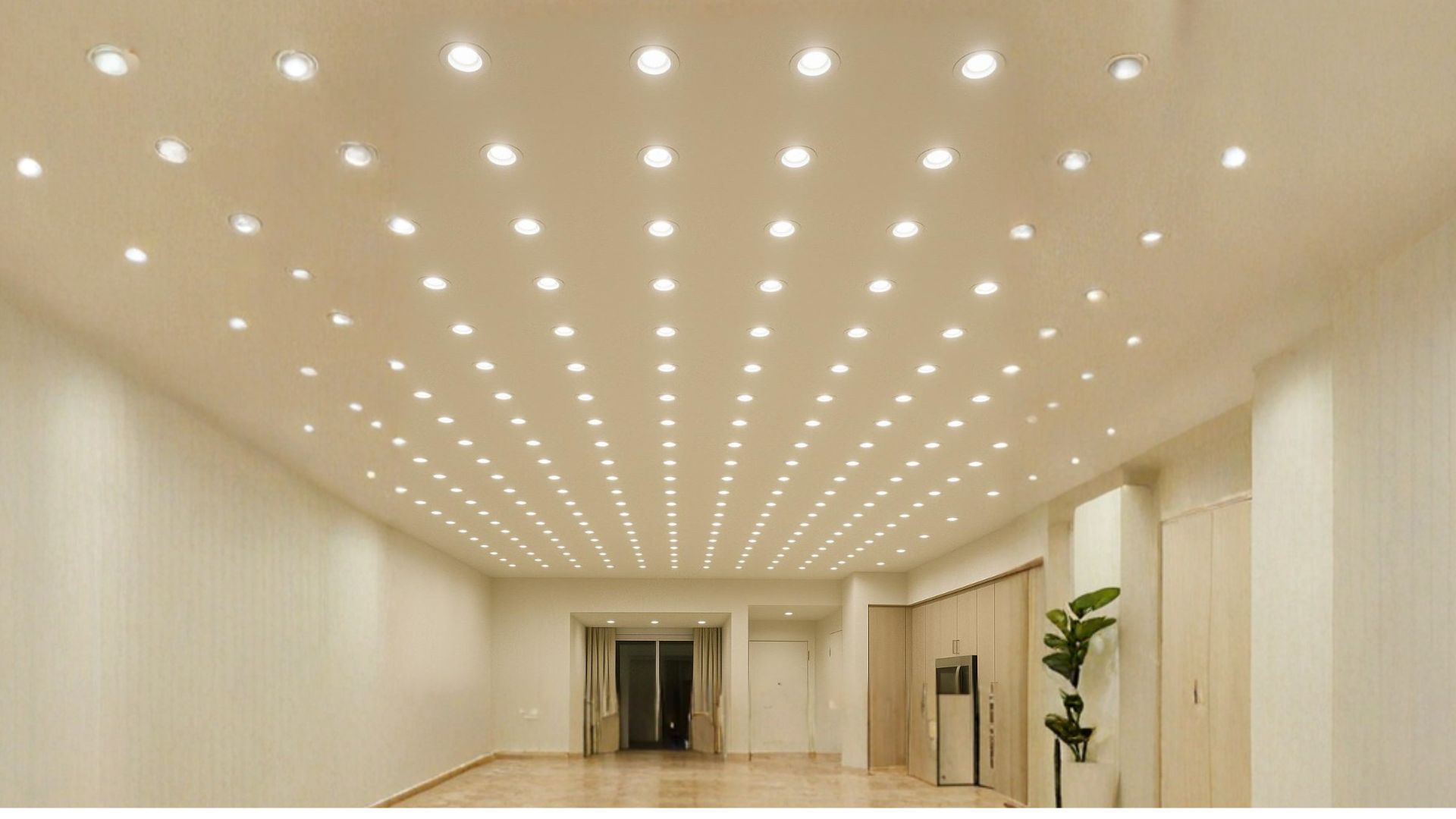
Recessed lighting, often called pot lights, is now a default choice in residential construction and renovation across Quebec and Canada. Clean, discreet, and easy to install, pot lights are frequently used as a one-size-fits-all solution.
But when overused—or poorly specified—recessed lighting can do more harm than good.
As a residential lighting design studio, we often see beautiful homes undermined by excessive pot lights and uncomfortable glare. Ceilings become crowded with fixtures that add light but not quality.
The Problem With Overusing Pot Lights
Pot lights are often installed to ensure “enough light,” but quantity does not equal quality. When recessed lighting becomes the primary or only light source, the result is typically:
• Flat, uninviting spaces.
• Harsh, downward lighting that creates glare.
• Shadowed faces and dark walls.
• Ceilings filled with unnecessary fixtures.
• A lack of depth, warmth, and atmosphere.
Instead of enhancing architecture, overused pot lights often compete with it.
Recessed Lighting Is a Tool—Not a Lighting Plan
Recessed fixtures are just one component of a layered lighting design. Without a broader lighting strategy, they are often spaced evenly across ceilings. This ignores how the space is actually used.
A professional lighting plan considers:
• Ambient, task, and accent lighting layers.
• Vertical illumination to balance the space.
• How light interacts with materials and finishes.
• Where light should be felt—not seen.
Pot lights work best when they support other light sources, not when they attempt to replace them.
Not All Recessed Lights Are Created Equal
One of the most overlooked aspects of recessed lighting is fixture selection. Choosing the wrong type of pot light is one of the main causes of glare and discomfort in residential spaces.
When specifying recessed lighting, it’s essential to consider:
• Beam angle – Narrow beams increase glare and harsh contrast.
• Recess depth – Shallow fixtures expose the light source directly.
• Trim design – Poor trims create visual discomfort.
• Light source positioning – Visible LEDs cause eye strain.
• Color temperature – Incorrect Kelvin values make spaces feel cold.
High-quality recessed fixtures with deep regress and proper optics make a significant difference. However, they must be specified intentionally.
Glare: The Silent Comfort Killer
Glare is one of the most common homeowner complaints. It often appears after moving into a new build or completing a renovation.
This occurs when:
• The light source is visible from normal viewing angles.
• Fixtures are placed without regard to sightlines.
• Ceilings rely too heavily on downlighting.
A well-designed architectural lighting plan minimizes glare by balancing recessed lighting with indirect, concealed, and wall-based illumination.
Fewer Fixtures, Better Results
One of the biggest misconceptions in residential lighting is that more fixtures lead to better lighting. In reality, the opposite is often true.
A thoughtfully designed lighting plan typically results in:
• Fewer pot lights.
• Cleaner ceilings.
• More comfortable illumination.
• Greater emphasis on architecture and materials.
• A home that feels calm, warm, and intentional.
This is where professional lighting design adds real value.
Why Lighting Planning Matters—Especially Early
Most recessed lighting mistakes happen because lighting decisions are made too late. Once ceilings are closed, options become limited. Compromises are often unavoidable.
Working with a lighting design studio early in the process allows for:
• Strategic placement of recessed fixtures.
• Proper fixture selection to avoid glare.
• Integration of indirect and architectural lighting.
• Coordination with architecture and interior design.
At iluce Concepts, lighting planning is not about adding more fixtures—it’s about designing the right light, in the right place, for the way you live.
Overusing Pot Lights Is a Design Issue—Not a Preference
When a home feels harsh, flat, or uncomfortable after dark, it’s rarely about personal taste. It’s almost always about lighting design.
If you are building, renovating, or upgrading your home, a professional lighting plan can prevent common mistakes, protect your investment, and elevate your space well beyond what pot lights alone can achieve.
Thoughtful lighting doesn’t draw attention to itself.
It simply makes everything else look and feel better.