

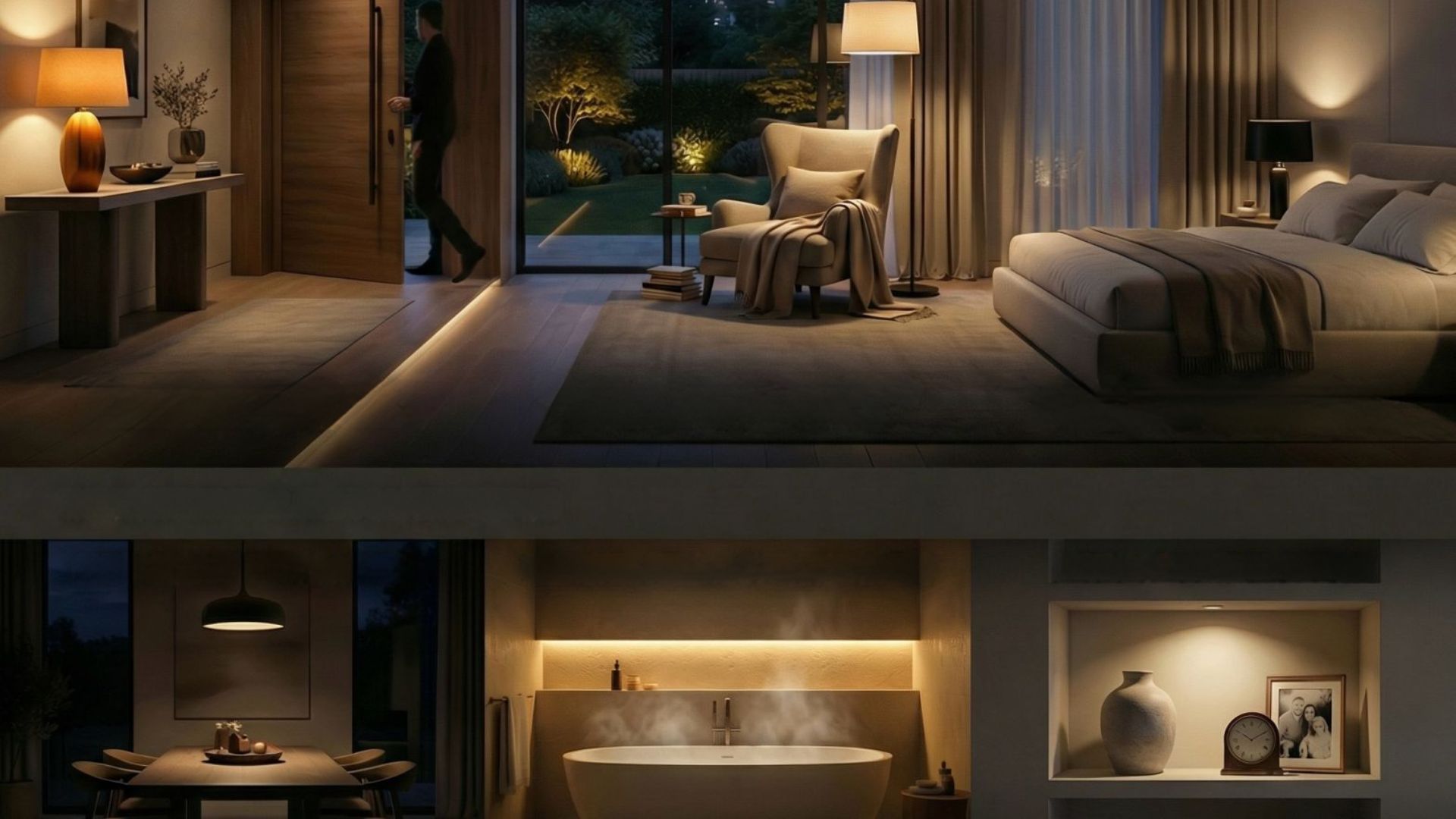
When homeowners imagine their dream home, they think about floor plans, finishes, cabinetry, and maybe even statement light fixtures. What’s often overlooked, until it’s too late, is lighting planning. And as a lighting expert, I can confidently say this: thoughtful lighting design is not a luxury add-on. It’s a foundational element of how your home will look, feel, and function for decades.
Lighting Is More Than Choosing Fixtures
Lighting design isn’t about picking pretty pendants at the end of a project. It’s about how light supports your daily life. A well-lit home enhances comfort, improves functionality, supports well-being, and elevates architectural details you’re already investing in.
Without a plan, lighting often becomes reactive:
-Too many pot lights in some rooms, not enough in others
-Glare in kitchens and bathrooms
-Dark corners in living spaces
-Beautiful materials that disappear once the sun goes down
Good lighting design ensures every space works as intended—day and night.
The Best Time to Design Lighting Is Before Construction
When lighting is considered early—during architectural and electrical planning—you unlock options that simply aren’t possible later. This includes:
-Integrated architectural lighting (coves, wall washes, concealed LEDs).
-Proper placement of switches and dimmers.
-Layered lighting zones for flexibility.
-Clean ceilings without unnecessary clutter.
Retrofitting lighting after drywall goes up is always more expensive, more limited, and more compromised.
Layered Lighting Creates a Better Home
Professional lighting design is based on layers of light, not a single source:
–Ambient lighting for overall illumination.
–Task lighting where work happens (kitchens, bathrooms, offices).
–Accent lighting to highlight textures, art, and architectural features.
This layering creates depth, warmth, and adaptability—so your home feels just as good during a quiet evening as it does when hosting friends.
Lighting Impacts Mood, Health, and Energy
Light affects circadian rhythms, focus, and relaxation. Poor lighting can cause eye strain, fatigue, and discomfort, while well-designed lighting:
-Supports natural sleep cycles.
-Adapts to different times of day.
-Reduces reliance on harsh overhead lighting.
-Improves energy efficiency through smarter placement and controls.
Smart planning also means fewer fixtures doing more work—often lowering long-term energy costs.
Your Architecture Deserves to Be Seen
You’re investing in materials, textures, and craftsmanship. Without proper lighting, much of that investment disappears at night. Grazing light across stone, softly washing a wall, or framing a staircase with subtle illumination can completely transform how a space is perceived.
Lighting doesn’t compete with architecture—it reveals it.
A Long-Term Investment, Not a Last-Minute Decision
Lighting is one of the few elements of a home that impacts every single room, every single day. When designed properly, it adds lasting value, comfort, and beauty. When overlooked, it becomes a daily frustration that’s costly to fix.
If you’re building a new home, working with a dedicated lighting studio early in the process can make all the difference. A thoughtful lighting plan—tailored to your architecture, lifestyle, and aesthetic—ensures your home is not only beautiful on day one, but continues to feel right for years to come.
Because great homes aren’t just built.
They’re illuminated with intention.
GET STARTED NOW. Do you have more questions? BOOK A DISCOVERY CALL