
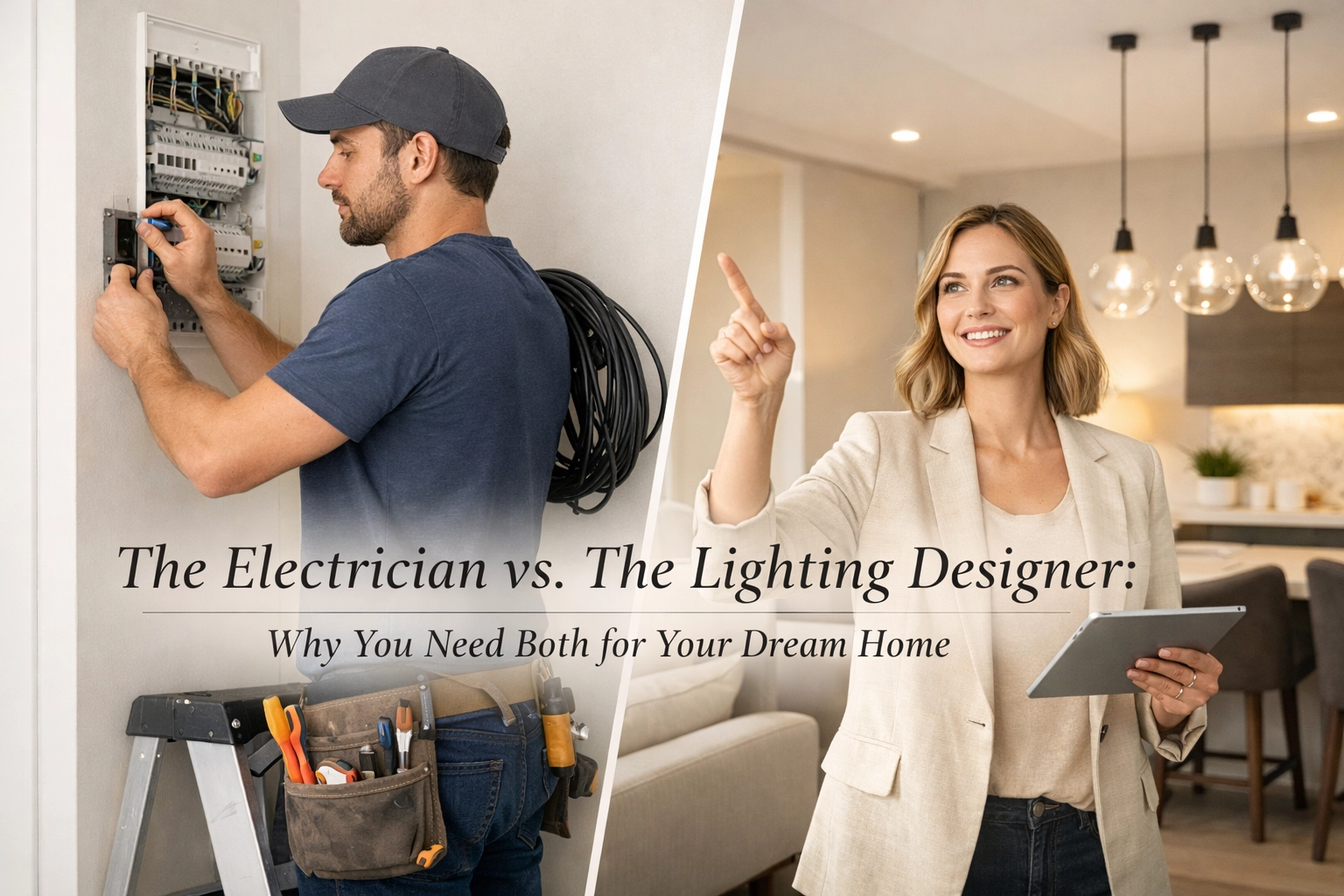
Let’s get one thing straight: I love electricians. They are the wizards of wires, the guardians of the breaker box, and the reason your house doesn’t spontaneously combust when you plug in your air fryer. If you’re building or renovating a home, an electrician is a non-negotiable part of your crew.
But here’s the cold, hard truth that I’ve learned over 15+ years as a Lighting and Design Director at iluce Concepts: An electrician is not a lighting designer.
Asking your electrician where your lights should go is a bit like asking your plumber what kind of tile looks best in your shower. Sure, they can install it, and it will definitely function, but will it be beautiful? Will it make you feel like you’re living in a five-star sanctuary or a sterile convenience store?
In the world of residential lighting design, the difference between the “How” and the “Why” is the difference between a house and a home. Let’s break down why you need both pros on your team to get the glow you deserve.
The Electrician: The Master of the “How”
Your electrician is the technical backbone of your project. They are specialists in safety, code, and infrastructure. When they walk into a room, they aren’t looking at how the light grazes your textured wallpaper; they’re looking at load calculations, circuit paths, and junction boxes.
As a lighting expert, I know that without a skilled electrician, even the most brilliant lighting consultation is just a piece of paper. They handle:
–Safety and Codes: Ensuring everything is grounded, shielded, and up to local standards.
–The Wiring Grid: Mapping out how power gets from your panel to your ceiling.
–Mounting and Mechanics: Knowing if a heavy chandelier needs extra structural support.
–Voltage Drops: Calculating if your low-voltage LEDs will actually light up at the end of a long run.
They are the “How.” They make sure that when you flip the switch, the light turns on. But their priority is efficiency and function. If you leave the placement of your pot lights up to an electrician, you’ll likely end up with a “Swiss Cheese” ceiling: perfectly symmetrical rows of lights that provide zero atmosphere and a whole lot of glare.
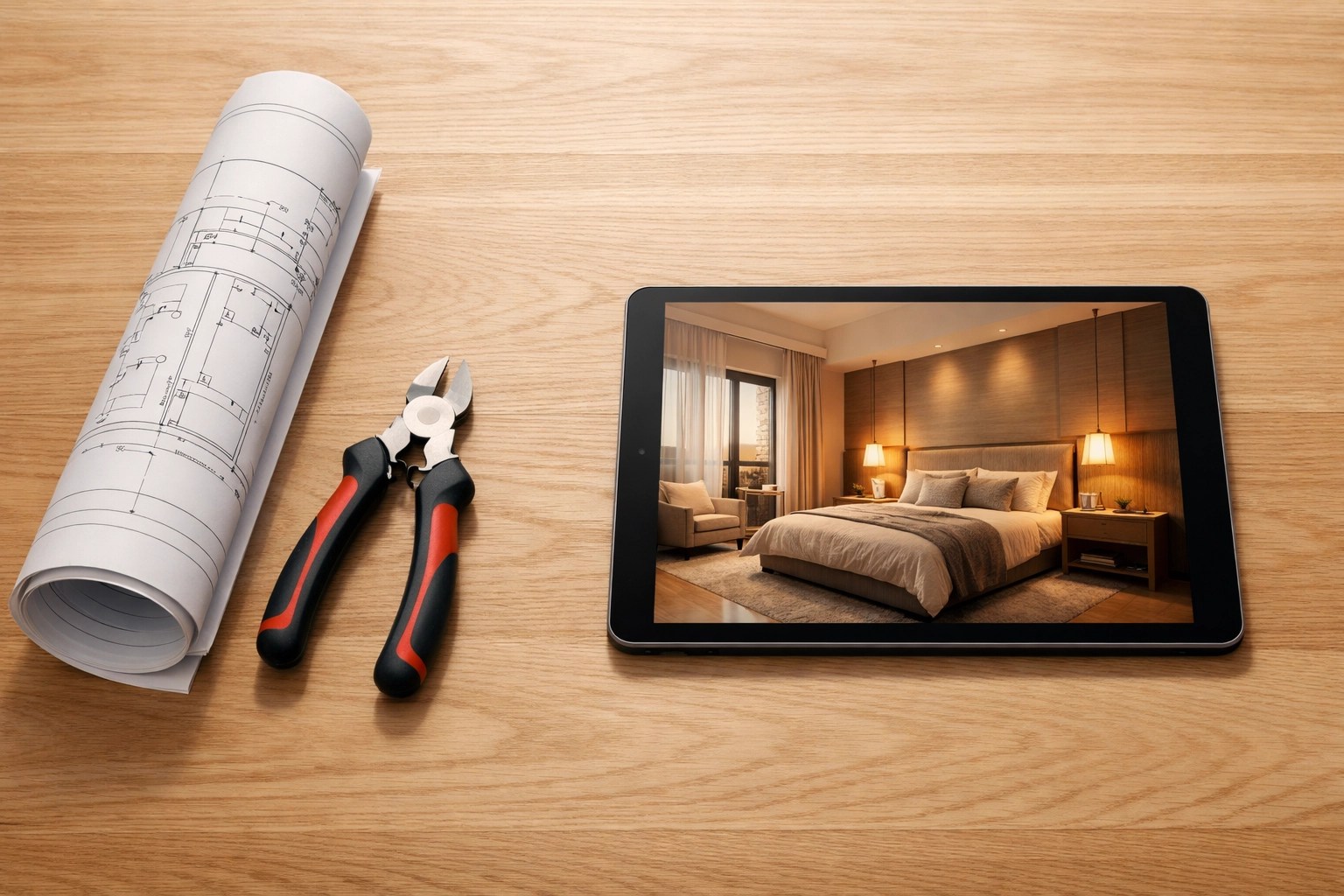
The Lighting Designer: The Master of the “Why” and “Where”
This is where we come in. At iluce Concepts, we don’t just look at a floor plan; we look at a lifestyle. A lighting designer is part artist, part psychologist, and part optical engineer. We don’t just ask if a light can go there; we ask why it should.
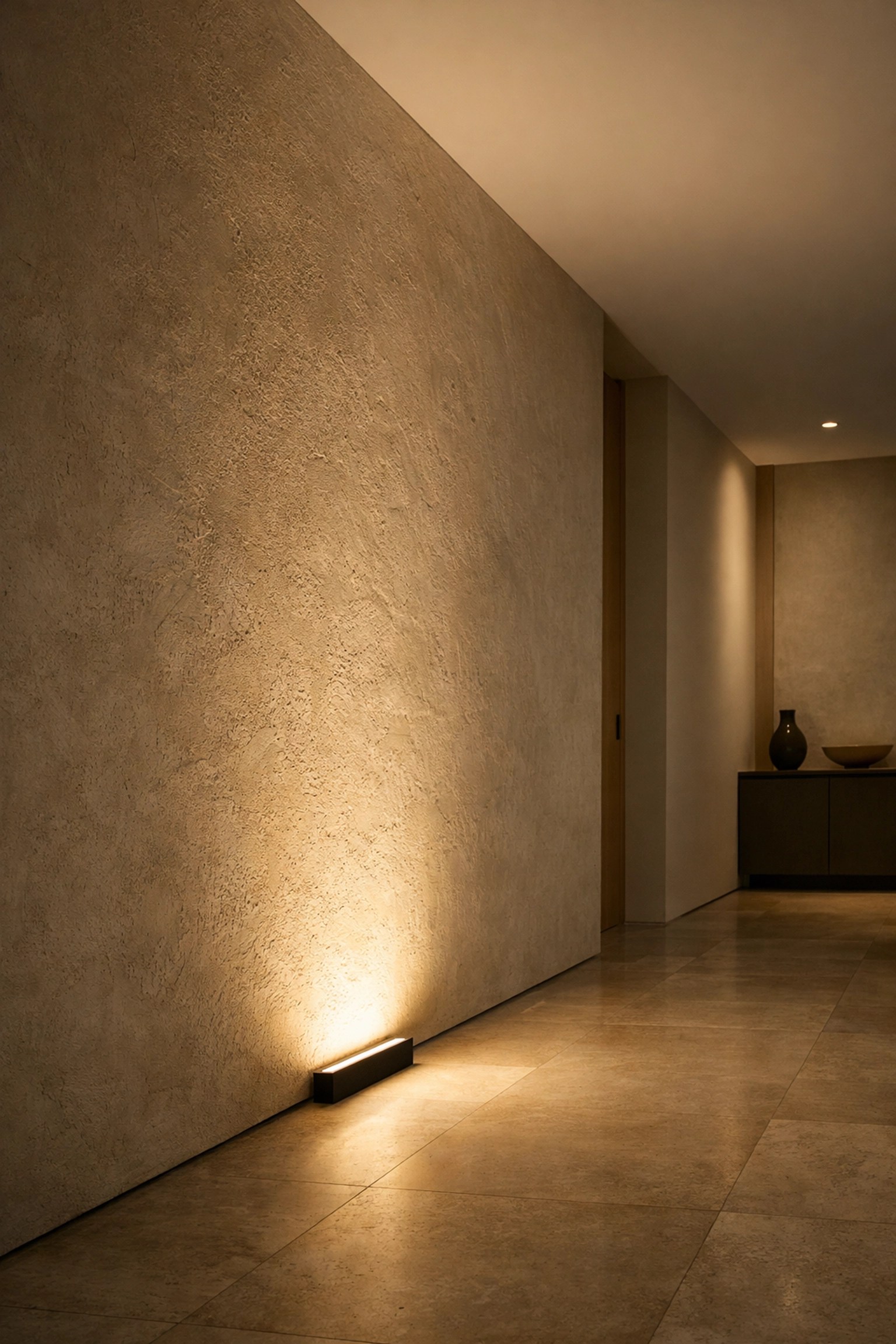
While the electrician is focused on the wire, we are focused on the human experience. Residential lighting design is about sculpting a space. We think about:
–Layering: Combining ambient, task, and accent lighting so your room feels three-dimensional.
–Color Temperature: Ensuring your kitchen doesn’t look like a surgical suite with harsh 5000K blue light.
–Shadow Play: Knowing where not to put light is just as important as knowing where to put it.
–Visual Hierarchy: Guiding the eye to your favorite piece of art or that stunning marble island.
As we’ve discussed before, lighting design should be planned before you build, not as an afterthought. We aren’t just picking out “pretty fixtures” from a suppliers list; we are designing the very air you breathe within your home.
The Disaster of the “Standard” Plan
I’ve seen it a thousand times: a homeowner skips the un plan d'éclairage professionnel because the contractor said, “Our guy does this all the time.”
Six months later, they call me because their living room feels cold, or they have a shadow over their face while they’re cooking, or: my personal favorite: they have 24 recessed lights in a 200-square-foot room and the ceiling looks like a landing strip.
A lighting designer can actually save you money. By strategically placing fixtures and choosing the right beam angles, we often find that we can use fewer lights to achieve a better result. We eliminate the redundancy of “filler” lighting and replace it with intentional illumination.
The Perfect Collaboration
The magic happens when the designer and the electrician work in tandem.
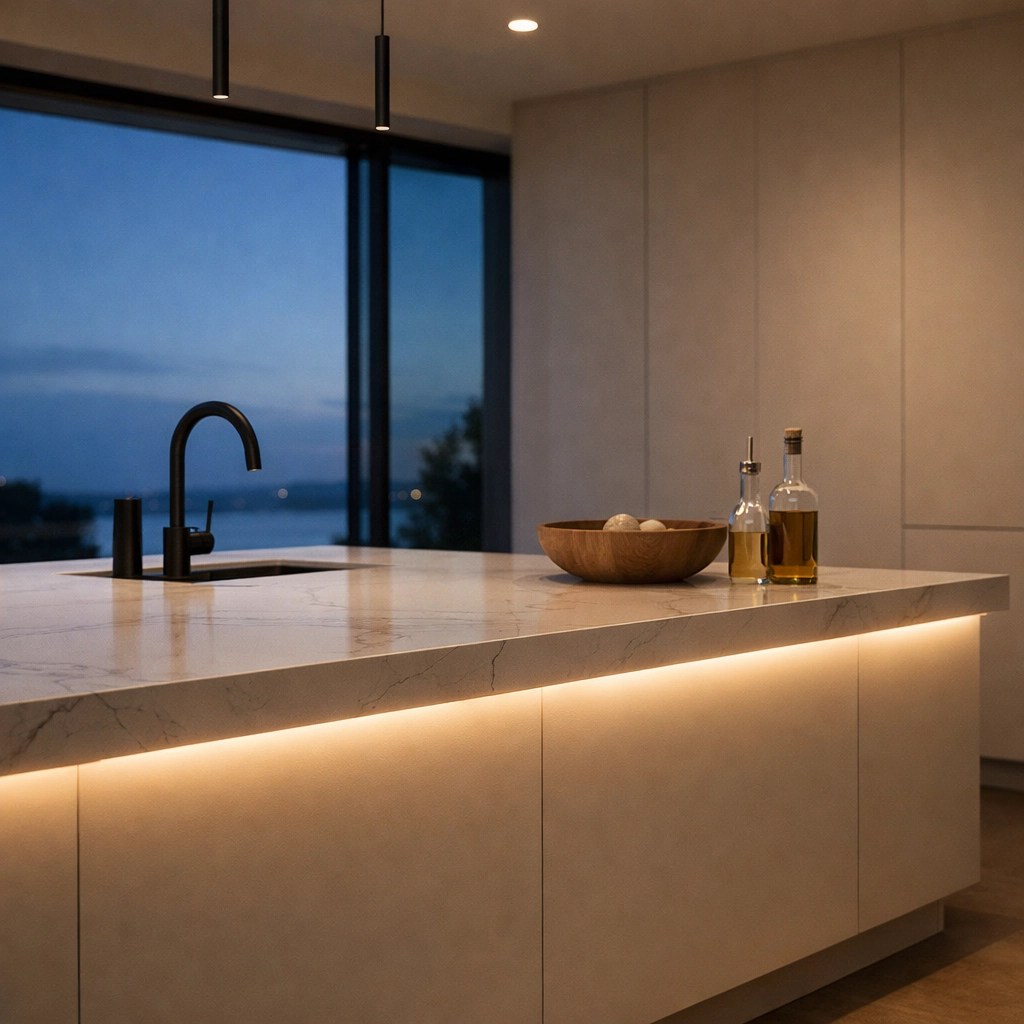
Imagine your kitchen. The lighting designer specifies an integrated LED tape light hidden under the lip of your island to create a floating effect. The electrician then determines where the remote driver needs to be tucked away in a cabinet for easy access.
The designer chooses a fixture with a high CRI (Color Rendering Index) so your food looks delicious. The electrician ensures the dimming switch is compatible with that specific bulb so it doesn’t flicker like a haunted house.
This is the dream team. One provides the vision; the other provides the power.