

(No Rewiring Required)
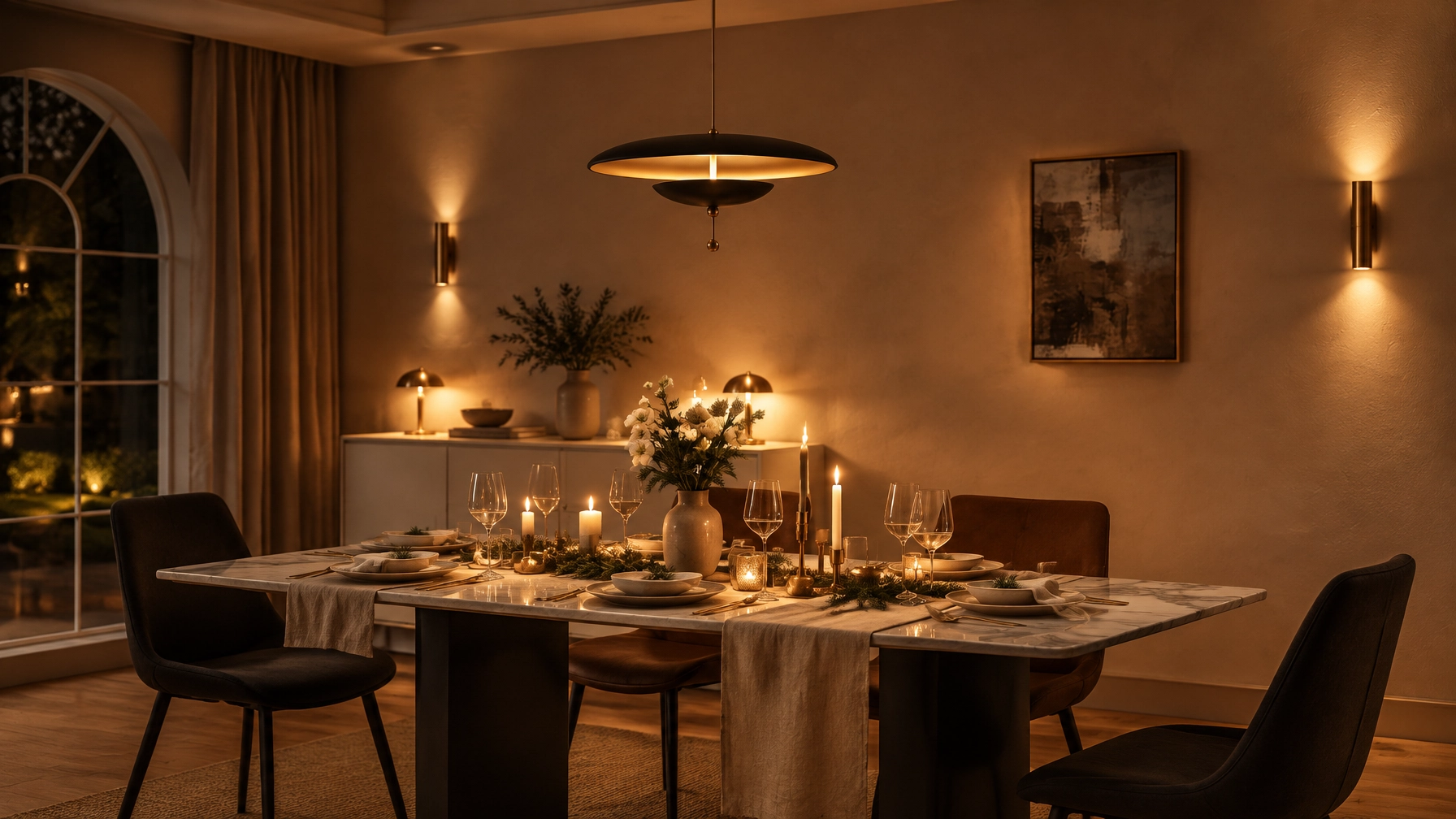
Holiday hosting is about more than a beautifully set table. The light in your home shapes how guests feel, how easily they connect, and whether the room feels welcoming or washed out. The best dining room lighting ideas don’t require a renovation. They turn an ordinary dining room into a warm, relaxed gathering place, without opening a wall or calling an electrician. As a lighting expert, I know the most common dinner-party problem: one bright ceiling fixture doing all the work. It can flatten the room, create glare, and make an otherwise lovely space feel like it’s waiting for a meeting. The solution is to build a few gentle layers using lights you already own, plus a couple of portable additions. Here are six practical steps to create inviting holiday dinner party lighting in an afternoon, whether you’re hosting at home or helping a client prepare a space for the season.
1. Turn down the overheads to soften the whole room
Start by switching off your ceiling lights or dimming them significantly. A strong overhead light sends illumination straight down, creating hard shadows and making faces, walls, and furnishings look flatter. It may be useful while serving, but it rarely creates the relaxed atmosphere people want around the table. If your ceiling fixture has a dimmer, lower it until it provides a soft background glow. If it doesn’t, turn it off and let smaller light sources do the work. Keep the overhead switch accessible so you can bring it back up for clearing plates or finding a dropped fork. The goal isn’t a dark room. It’s a room with comfortable contrast: a softly lit table, a warm glow around the perimeter, and enough visibility to move around easily. For homeowners, this is the quickest change to try. For interior designers, it’s a useful reminder that the room’s existing ceiling fixture doesn’t need to carry every lighting job at once.
2. Layer low, warm light for a cocoon-like feel
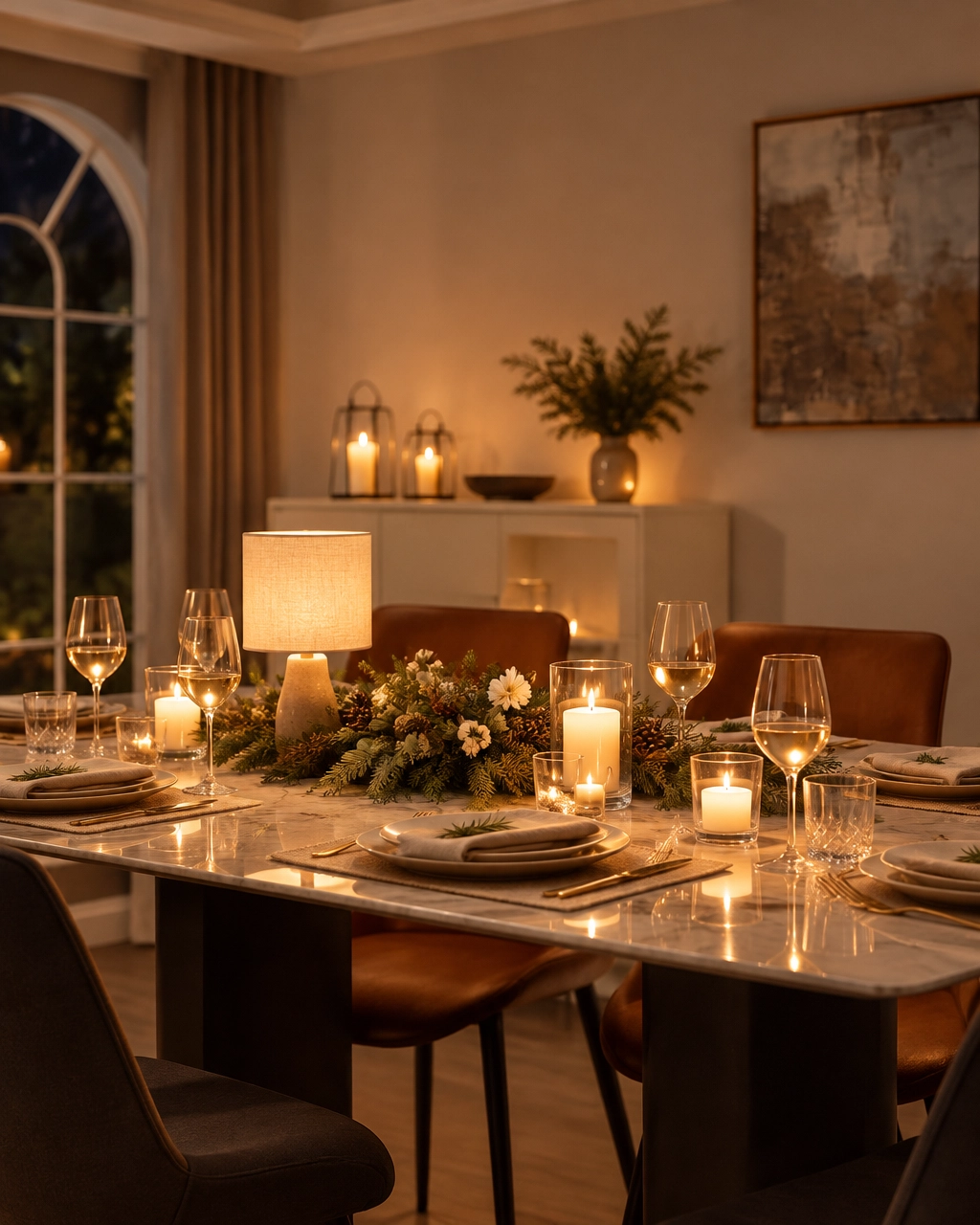
Bring light down to eye level with table lamps on a console, sideboard, or nearby table. Lamps with fabric or opaque shades soften the light and add warmth to the room without shining directly into anyone’s eyes. If your living room connects to the dining area, include a lamp there too: the wider glow helps the spaces feel connected rather than leaving guests in a bright island surrounded by darkness. Candles add another gentle layer, but don’t let them do every job. Use them alongside lamps so guests can see comfortably when serving, eating, and moving around. Keep flames away from greenery, loose fabric, and high-traffic spots; flameless candles are a practical choice for busy tables or homes with children and pets.
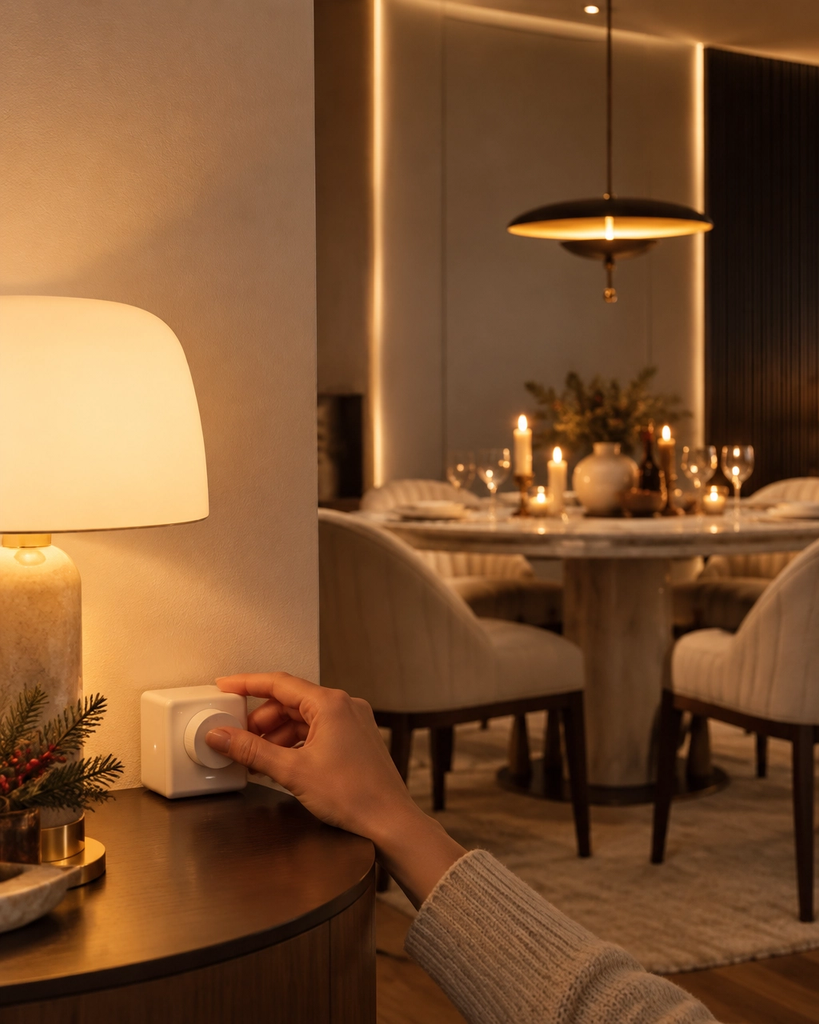
A simple starting mix:
- One or two shaded lamps on a sideboard or console
- A portable lamp near the dining area
- Candles or flameless alternatives on the table
- A lamp in an adjoining living room to extend the warm atmosphere
Good dining room lighting comes from several comfortable sources, not one overpowering bulb.
3. Add rechargeable table lamps for glow that goes anywhere
Rechargeable table lamps are the quiet heroes of a no-rewiring setup. No cord, no outlet, no electrician: you charge them in the afternoon and move them wherever the room needs light at night. They’re also the closest thing to testing a lighting plan before you commit to one. Place one on the sideboard for perimeter warmth, one on the table as a low pool of light, or one on a console near the entry so guests arrive into a glow instead of a dark hallway. Because they’re portable, you can shift them in minutes as the evening changes: brighter near the serving area, softer once everyone is seated.
A few things worth choosing and checking:
- Diffused or shaded light: a globe, opal, or fabric shade keeps the source out of sight and out of guests’ eyes.
- A warm source in the 2700–3000 range: it reads as candlelight, not task light.
- A full charge before guests arrive: plug them in earlier in the day, then unplug and place them.
- Small enough to move easily: the best cordless lamp is the one you’ll actually reposition.
They’re not just for the holidays, either. A rechargeable lamp follows you to a patio dinner in summer, a bedside table in a guest room, or a bathroom shelf that never had an outlet. For designers, they’re a practical way to show a client how a layer will feel before wiring decisions are locked in.
4. Light the table without blocking conversation
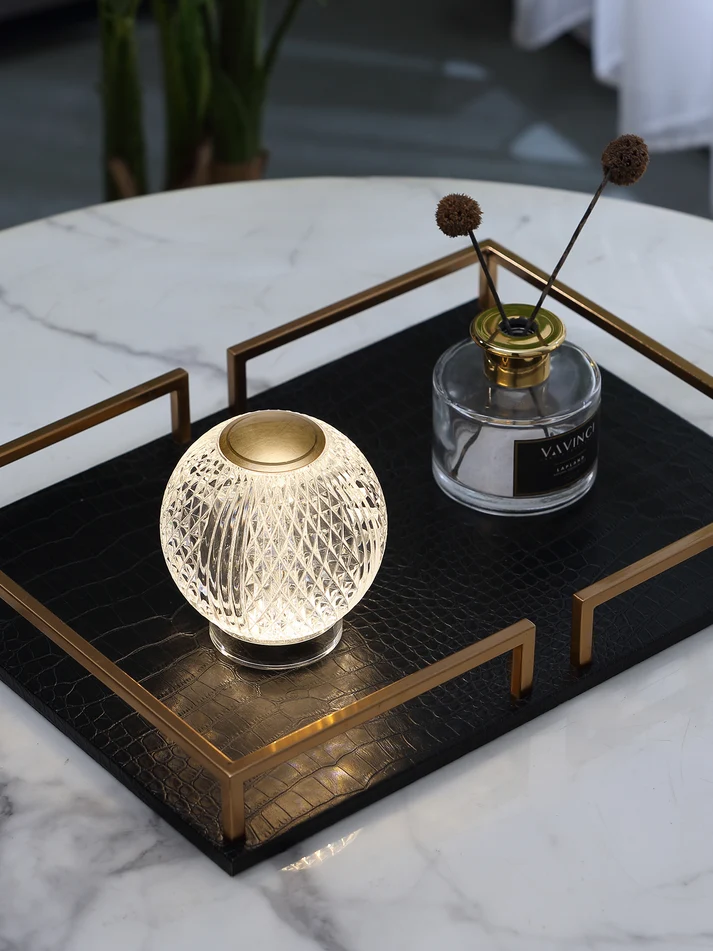
The table is where guests gather, so it needs a welcoming pool of light. If you have a pendant or chandelier over it, dim it where possible. Then add candlelight or a small cordless lamp to create a more intimate centerpiece of light.
A slim portable fixture can be a lovely option, especially on a long table, but keep the view across the table clear. Place it where it won’t compete with serving dishes or interrupt conversation. Choose a shaded or diffused lamp rather than an exposed bright bulb, and check the glow from seated eye level before guests arrive.
Candles should complement the table, not tower over it. Keep the arrangement low enough for guests to see one another, and leave room for plates, glasses, and serving dishes. Unscented candles are usually the considerate choice at dinner, where fragrance can compete with the food.
Sconces can also help frame a dining area or highlight artwork nearby. They’re among the most underused lighting options, yet they offer three things at once: functional light, a decorative detail, and a soft layer of ambiance. If you’re renting or don’t want electrical work, a well-secured plug-in wall light may provide a similar wall-level glow without rewiring.
5. Add a glow layer guests may not notice, but will feel
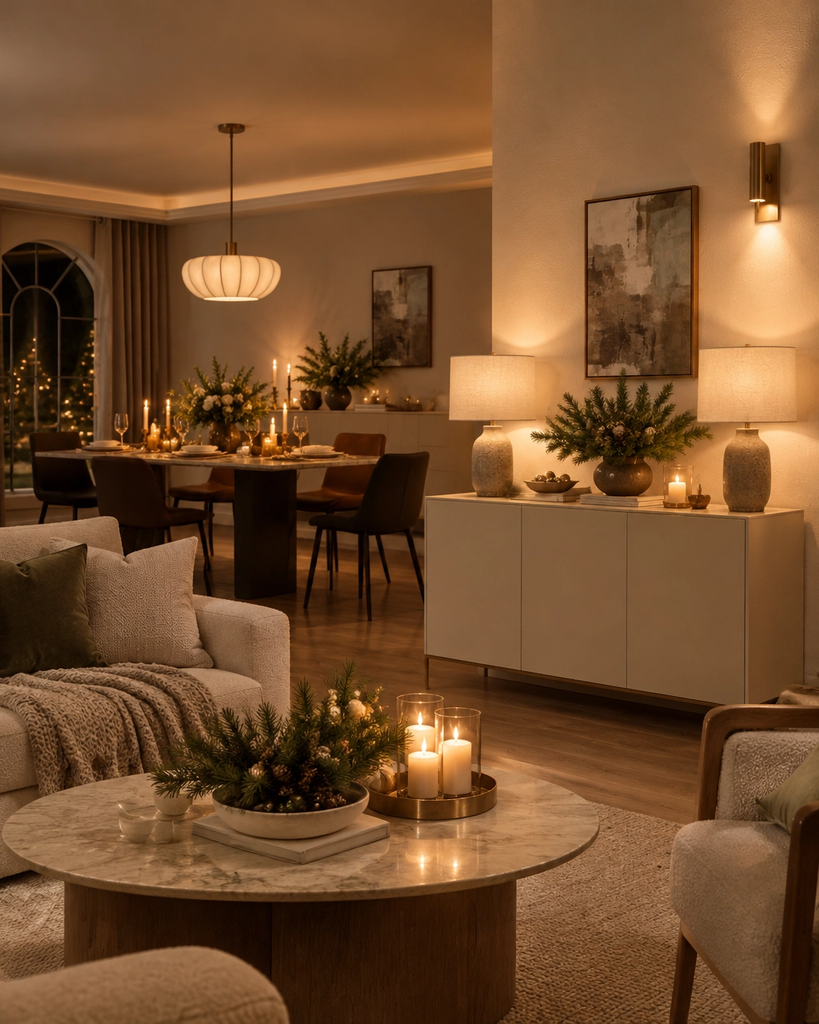
Once the table and lamps are set, look for dark corners that make the room feel visually cut off. A small light on a console, a plug-in sconce near a seating area, or a subtle LED strip beneath a counter can spread a gentle glow through the space. This low-key perimeter light helps the room feel complete when the overheads are dim.
Sconces are especially useful here. Positioned beside a mirror, artwork, or a hallway leading to the dining room, they create a welcoming transition and help guests orient themselves. Their light can wash across a wall, add depth to the room, and contribute a decorative focal point. All without taking up table or floor space.
For a no-rewiring setup, choose plug-in fixtures and follow the manufacturer’s mounting and cordmanagement instructions. Keep cords away from walkways and never run them under rugs. For LED strips, use a product intended for the location and install it as directed; avoid placing it near heat sources or where it could be damaged.
The best accent light supports the room quietly. Guests may not point to the sconce or the glow beneath the console. They’ll simply feel that the space is warm and easy to settle into.
6. Set the scene with dimmers and simple controls
Before guests arrive, test the whole arrangement. Turn on the lamps, table light, and accent lighting, then sit in different seats. Check whether anyone is looking straight at a bright bulb, whether the table is comfortable to see, and whether paths between rooms are clear If you have dimmers, use them to fine-tune the ceiling light or compatible fixtures. Smart plugs can make it easy to switch ordinary lamps on and off together, while compatible smart bulbs or lighting controls may offer dimming. Check that your bulbs and controls are designed to work together: plugging a lamp into a basic smart plug doesn’t automatically make it dimmable.
For comfortable warm lighting, choose light sources in the 2700–3000 range and keep them consistent across the room. A mix of very cool and very warm sources can make the space feel disjointed. If you’re unsure, test the bulbs at night before the party rather than judging them in daylight.
A quick pre-party check:
- Dim or switch off the overheads.
- Turn on lamps and accent lights.
- Check the table from seated eye level.
- Make sure walkways and serving areas are visible.
- Keep cords secured and candles safely away from anything flammable.
Can I create holiday dinner party lighting without buying new fixtures?
Absolutely. Start with the lamps you already have, move one from an adjoining room if needed, and use candles or safe flameless alternatives to add a low glow. A few thoughtful changes in placement can make a bigger difference than adding more light.
What if my dining room has no dimmer
Switch off the overhead and use lamps, portable lights, and candles instead. If you need the ceiling fixture for serving or cleanup, turn it on when necessary and return to the softer setup for dinner.
Want a lighting plan that works beyond the holidays?
A holiday setup can reveal what your space needs every day: better layers, more useful switching, or a light source in the right place. If you’re planning a renovation, designing a home, or coordinating a project, iluce Concepts offers custom lighting plans and virtual lighting consultations to help make those decisions with intention.