

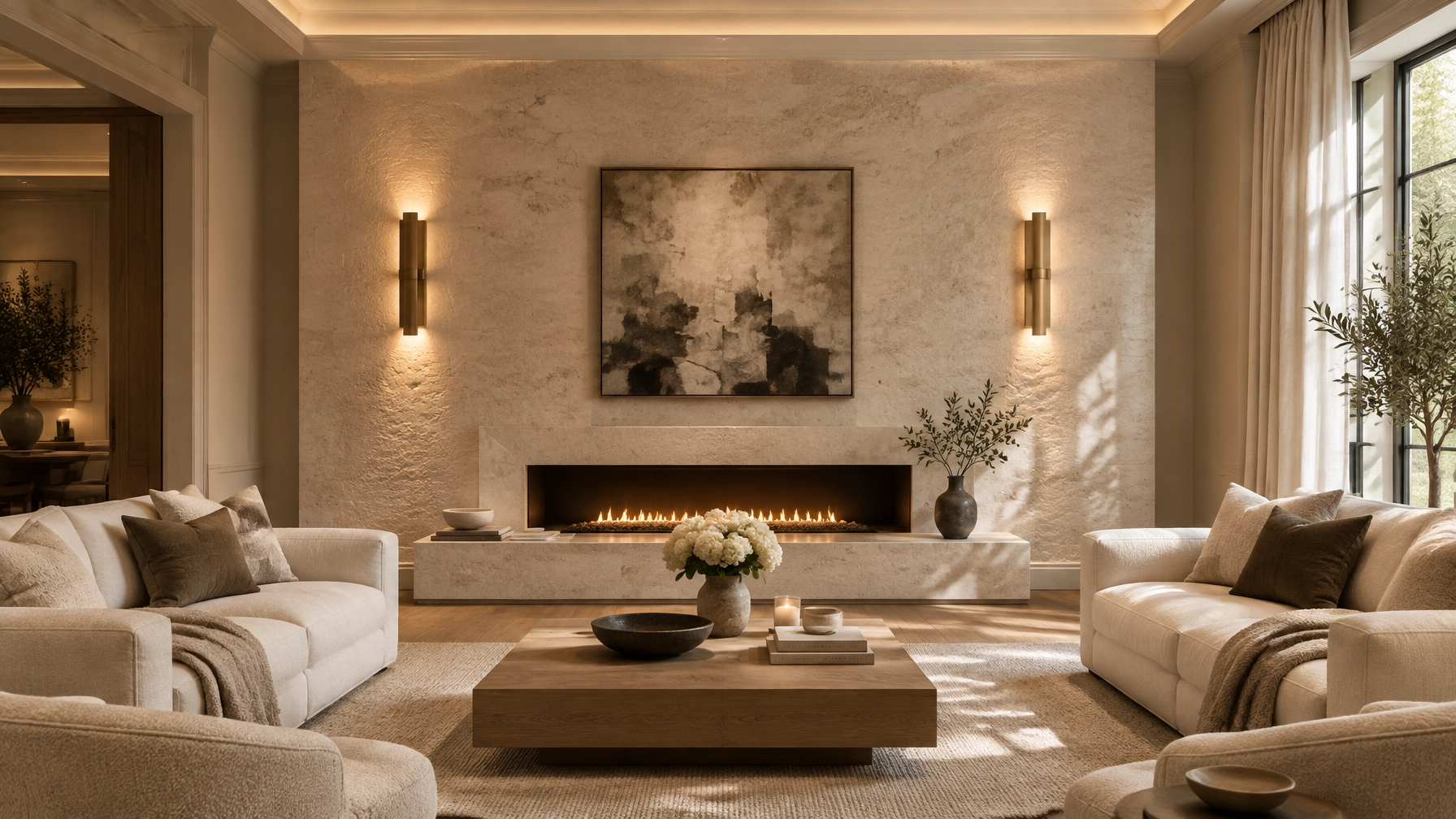
A wall can be more than a backdrop. With thoughtful wall grazing lighting, its texture becomes part of the room’s atmosphere. Stone feels tactile, plaster gains depth, and a simple hallway can feel welcoming rather than forgotten.
Sconces are one of the most underused tools in residential lighting design. Homeowners often think of them as purely decorative, and designers sometimes reserve them for a single statement moment. In reality, a well-placed sconce works on three levels at once: it’s functional (reading light, hallway illumination, face-flattering light beside a mirror), decorative (a fixture that earns its place even when switched off), and ambiance-setting (a grazing glow that turns texture into atmosphere). Few light sources deliver all three in one move, which is why getting sconce placement right is worth the planning effort.
As a lighting expert, I know the difference often comes down to two decisions: where a sconce sits and how its light meets the wall. Get those right, and light and architecture work together. Get them wrong, and the result can be glare, harsh shadows, or a feature wall that looks flatter than it did in daylight.
As a lighting expert, I know the difference often comes down to two decisions: where a sconce sits and how its light meets the wall. Get those right, and light and architecture work together. Get them wrong, and the result can be glare, harsh shadows, or a feature wall that looks flatter than it did in daylight.
Wall grazing reveals texture; wall washing creates an even glow
Wall grazing sends light across a surface at a shallow angle. The fixture sits close to the wall, so the light catches raised and recessed details and creates gentle highlights and shadows. It’s especially effective on materials with natural variation, such as stone, brick, textured plaster, fluted wood, or carved panels.
Wall washing has a different goal: it creates a more even field of light across the wall, with fewer pronounced shadows. It’s often a better fit for smooth painted surfaces, artwork, or display walls where you want visual clarity rather than emphasis on texture.
Choose the right wall before choosing the sconce
Grazing is expressive. It makes surface texture visible, which also means it can reveal imperfections. Before settling on a fixture, look closely at the wall: repairs, uneven plaster, waviness, dirt, and inconsistent joints may become more noticeable once light travels across the surface.
Use grazing where that emphasis is part of the design intention:
- Fireplace surrounds: Bring out the character of stone or textured finishes.
- Feature walls: Give brick, plaster, or wood more depth and presence.
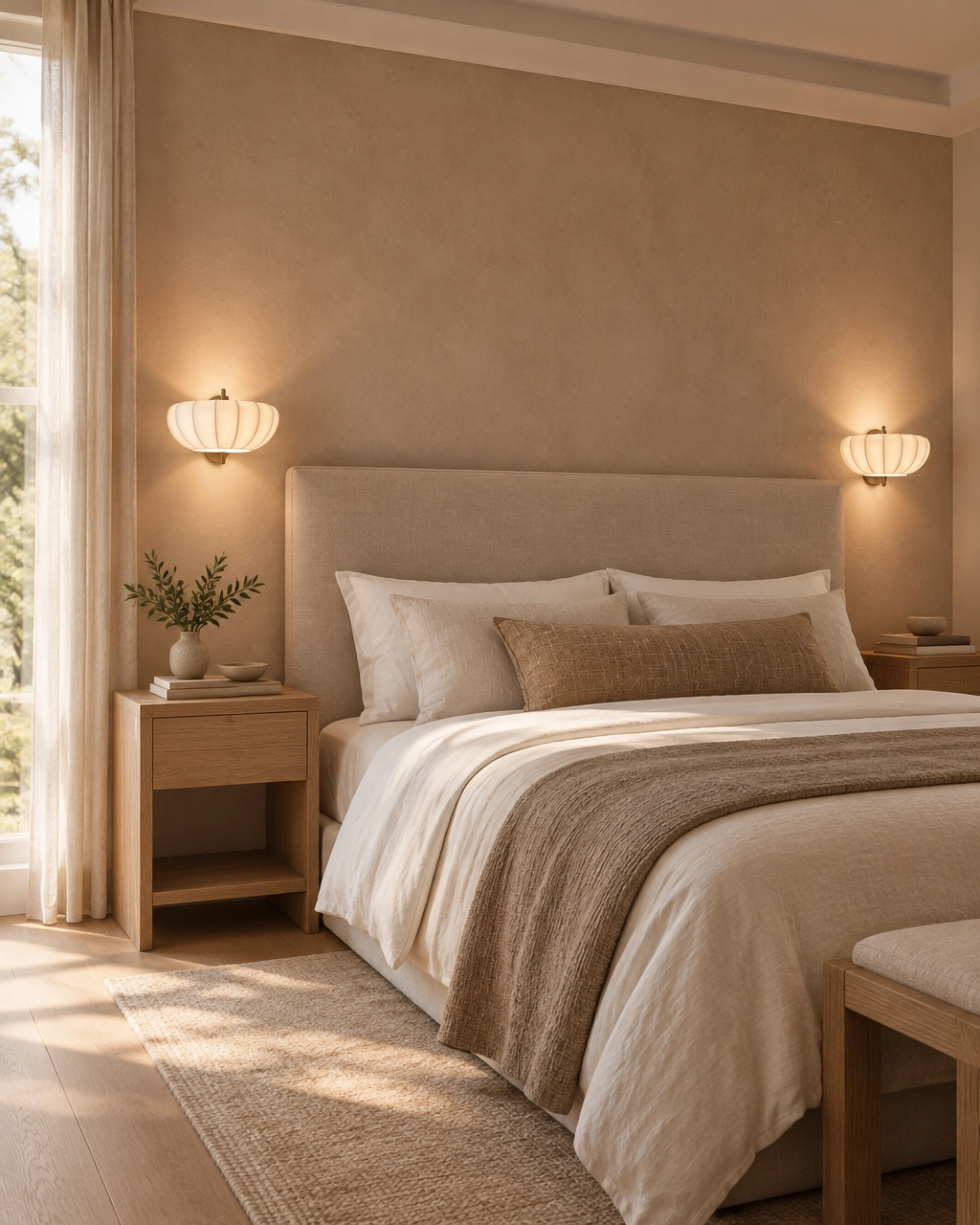
- Headboard walls: Create a soft, cocoon-like backdrop for a restful bedroom.
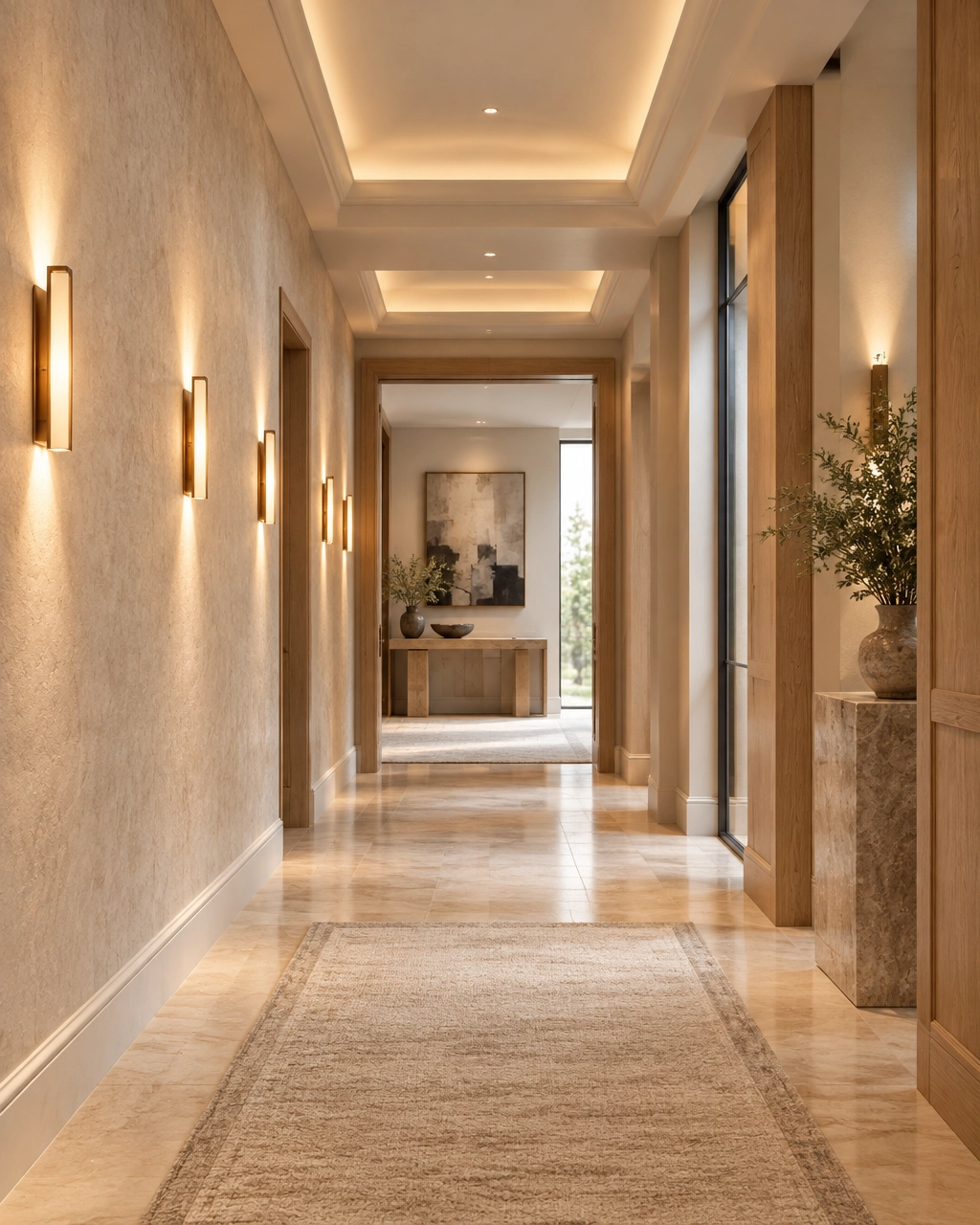
- Hallways and entryways: Add a welcoming rhythm and make a transitional space feel considered.
- Bathrooms: Pair sconces beside a mirror for useful face lighting, while choosing carefully how light meets surrounding surfaces.
- Artwork: Use an appropriate fixture and aiming to highlight the art without creating distracting glare or reflections.
Smooth walls can still look beautiful with sconce lighting. They may simply suit wall washing, a diffuse fixture, or a soft up-and-down effect better than a pronounced graze.
Start with height, then adjust for the room and the fixture
For many general wall sconces, a useful starting point is to place the fixture center about 60–72 inches (150–180 cm) above the finished floor. That range can work well in living spaces, entries, and hallways, but it is not a rule to apply without looking at the actual fixture and sightlines.
A sconce’s center is only one part of the decision. The fixture’s bright opening, shade, projection from the wall, and direction of light all affect how it feels in the room. Before electrical work, mark the proposed position on the wall and check it while standing, sitting, and walking through the space.
Some locations need a different approach:
- Beside a bed: Set the fixture for comfortable reading and easy reach, taking the mattress and headboard height into account. A lower position than the general 60–72-inch range may work better.
- Beside a bathroom mirror: Coordinate the height with the mirror and the faces using it. Aim for useful, flattering light, not a visible, glaring source.
- In a hallway or entry: Check sightlines from both directions, as well as doors, trim, artwork, and the fixture’s projection into the space.
Space sconces for a continuous effect, not just a tidy pattern
Even spacing can look orderly on a plan, but light needs to work on the wall itself. A rough starting point for decorative sconces is about 4–6 feet apart. The right spacing changes with the fixture’s light distribution, brightness, mounting height, wall finish, and how much overlap you want.
With grazing, separate beams may create distinct pools of light rather than a continuous glow. That can be an intentional rhythm, or it can leave dark gaps and uneven scallops. Pay attention to corners, doorways, changes in wall material, and interruptions such as windows or built-ins. A fixture that looks evenly spaced on paper may cast an unbalanced pattern once installed.
Plan the effect in elevation as well as on the floor plan. Review the fixture’s light distribution and, where available, photometric information. If the finish is important or the layout is complex, test a sample location before committing to every electrical box.
Avoid the placement mistakes that spoil the glow
few common missteps can undermine an otherwise beautiful lighting idea:
- Mounting the sconce too far from the wall: The light becomes less grazing, so texture and shadow contrast soften. Setback should be chosen for the actual fixture and intended effect.
- Choosing the wrong beam spread: A narrow beam may create sharp, isolated pools; a broad distribution may wash out the texture. Check what the fixture’s optics will do on your particular wall.
- Placing the bright source in a direct sightline: A lamp or LED visible at eye level can feel uncomfortable, especially in hallways, beside beds, or near mirrors. Adjust the height or position, or choose a fixture with better shielding.
- Skipping dimmers: Without control, an accent that looks lovely in the evening may feel too bright at other times. Dimming helps the wall glow gently rather than dominate the room.
- Ignoring the surface finish: Polished stone, glass, and glossy tile can reflect the fixture. Check for bright reflections from the positions where people will stand or sit.
Where comfortable warm light is desired, look to sources in the 2700–3000 range. And because surface, fixture, and viewing angle all matter, a nighttime mock-up is one of the best ways to confirm the result before installation.
Make sconces part of a layered lighting design
Sconces are most successful when they have a role in a larger layered lighting design. Because they can serve functional, decorative, and ambiance roles simultaneously, they’re the connective tissue between layers: accent light on a feature wall, ambient light in a hallway, or task light beside a mirror or bed. What they shouldn’t be expected to do is carry a room alone.
Layer sconces with other sources, such as ceiling or cove lighting for general illumination and dedicated task lighting where activities require it. Put the layers on suitable controls so the room can shift from bright and practical to soft and restorative. A thoughtful lighting scheme gives you choices; it doesn’t trap you in one mood.
This coordination is especially important for homeowners and for designers developing a lighting concept with an architect or contractor. Fixture locations, switching, wall finishes, and sightlines should be considered together, ideally before construction fixes the wiring positions. Explore iluce Concepts’ lighting plan service for support with fixture positioning, lighting effects, and control zones, or review the custom lighting plan for more details.
Bring your wall to life with intention
The best sconce placement is not a measurement copied from someone else’s room. It’s the result of considering the wall, the fixture, the people using the space, and the atmosphere you want to create.
If you’re planning a feature wall, bedroom, hallway, or bathroom, a lighting consultation with iluce Concepts can help you develop the concept before installation begins.
Walls don’t just hold the light.
They shape it into atmosphere.